Wednesday, 11 December 2013

Magazine Advert Finished Version

This is the final version of my magazine advert.
What I am most happy about is the broken glass background, as that took a lot of time and effort to perfect and enable me to see the masks through the broken glass, as well as still getting the good quality of the picture.
What I feel could require some improvement is the way the masks are set out behind the broken glass, originally the two tempters were going to be presented behind it, but due to the lack of time and costume we could not take the picture, so instead I opted for the two masks which I believe wouldn't give off as good an effect as the two tempters would.

Saturday, 7 December 2013

Magazine Advert Editing Update

This is what I have done for my magazine advert so far, which is the background and the masks in the broken glass, as well as part of the title.
The hardest part of editing so far has been creating a hole in the broken glass foreground in order to see the masks in the background, this is because I had to use a polygon tool in order to erase the black foreground which took a lot of time, effort and accuracy in order to do right and still preserve the good quality of the broken glass.
What I like so far is the way the two masks are portrayed behind the broken glass with the shadow effects which make them appear sinister.

Thursday, 5 December 2013

Final Choice

After some thought to what I am going to do for my magazine advert I have decided to use idea number 2, or the picture with the two tempters in a broken glass pane of some sort, as my final choice to do.
I chose this because I believe it will give off a good effect either to entice audiences or creep them out a little and cause some encouragement within the advertising.
I believe that this will also take some editing to acquire because of the superimposition that will have to be done in order to integrate the masks into the broken glass window, which will take time and effort to complete to a satisfying standard.

Wednesday, 4 December 2013

Magazine Advert Ideas and Draft Feedback

Today we gathered as a class and gave constructive feedback on each other's drafts for our magazine advert, including ways to improve and features which make the drafts good.

Overall the class gave good feedback to our draft ideas, with draft number 2 showing a good eye catching picture in the middle which would make audiences stop and look, draft number 1 also had positive feedback as it shows more brand identity and links back to the Digipak more than number 2, and number 3 received the most negative feedback as it was a similar idea to number 2, but the picture in then middle was seen as less eye catching.
Out of the three draft ideas we came up with, idea number 2 was most popular with idea number 1 coming close up.

Idea number 1 is of Lewis's Digipak background, where it is a Guy Fawkes mask surrounded by falling joker cards against a black background.


Idea number 2 is of a shattered mirror/window with the reflection of the two tempters in the window/mirror, with a large and prominent title.


Idea number 3 is similar to idea number two, but instead takes place in a train station which we filmed in, with the tracks clearly being seen, and broken glass on the floor through which one of the tempter's reflections can be seen, with yet again another large prominent title.

The magazine advert draft that I will be working off of is advert draft number 2.

Tuesday, 3 December 2013

Student Ancillary Analyses - Digipak

Mise en Scene:

Costume:
The costume used within this digipak resembles that of a dress that would be worn to a fancy occasion e.g. dances, balls etc.
Lighting:
The lighting is quite a high key, as if a photo shoot is taking place on the front cover, in my opinion I think that the lighting is too high a key and takes some of a the pattern away making the front cover look more confusing than it should be.
Make up:
There is evident make up used on the front cover as there is a girl posing for a photo in a dress which connotes it being a fancy occasion and so make up would obviously be used, apart from the front cover and disk space which both show the same image there are no other evident pictures that use make up.
Setting:
The use of setting within this digipak is very hard to place, as it contains a white background, but with odd patterns that border the digipak, mostly using flowers with a confusing pattern.

Iconography:

Iconography used within this digipak is evident on most pages, as the use of flowers and a picture of a boy clearly show a relationship has been created through the use of the music and the video. This is shown through the fact that there is a girl wearing make up as if going to a special event with a boy's picture on one of the inside pages with the quotation "xoxo" underneath it.

Texts/Fonts:

The texts and fonts used within this digipak are relatively sparse, and basic apart from the back cover which shows one quote written in fancy writing "in the strangest places and empty spaces" this quote is possibly added to inspire the people who listen to the music. The title is big and plain to make it clear to the audience who the artist is, although the album title is small and crammed into one corner which can be discouraging. The tracklisting has been typed out in relatively large text although against a white and grey background with the font being quite thin makes it harder to read which yet again can be seen as a difficulty.


Student Ancillary Analyses - Magazine Advert

Mise en Scene:

Costume:
The costume used within this advert resembles that of a dress that would be worn to a fancy occasion e.g. dances, balls etc. but also resolves around the use of floristry as many flowers are arranged around her shoulders and chest area.
Lighting:
The lighting used within this magazine advert consists of only high key lighting as if taking a photo shoot, no other sense of lighting is used as there is only one scene, this creates a surreal viewpoint of the artist on the advert as the high key lighting makes the scene very clear

Make up:
The make up used in this magazine advert consists of makeup only used on the artist as it is the only figure in the advert. The make up used consists of lipstick and mascara from what the audience can see as it is a black and white photograph.

Setting:

The use of setting within this digipak is very hard to place, as it contains a white background, but with odd patterns that border the digipak, mostly using flowers with a confusing pattern.

Logos/Brand identity:

The logos used within this advertisement include HMV, iTunes, and the record company, this is used to increase advertisement and notify the public of which studio helped this artist to record her songs.

Iconography:

The iconography used within this advertisement  is rather confusing, as the floristry used on the artist and the strange symmetrical patterns at the top of the advertisement may symbolise something, although the patterns can be difficult to look at whilst the flowers look as if they are an add on to the dress she is wearing.

Texts/Fonts:

The texts and fonts used within this advert are moderately basic, with the artist's name "CHARLOTTE WEBSTER" being plastered on the bottom of the advertisement in plain white font against a black background which is effective for catching the audience's eye but in terms of appeal in my opinion it is not the best font to use.
In terms of other texts on the advert they are basic and easy to read, with either a black coloured text against a white background or vice versa

Body language and expression:

The body language used within this advertisement consists of the artist posing for a photo with some flowers, using quite a model-like expression with the head slightly bowed down at an angle looking up at the camera which gives off a matter-of-fact type of expression in my opinion, which I believe gives off a good effect when the artist presents her digipak.


Brand Identity

Brand identity is a method of advertisement where it makes the artist's albums easier to recognise as a whole because of a feature within them which link them all together, for example some artists of the more mainstream pop genre tend to use their own image as a brand identity, for example Beyoncé uses herself as a form of brand identity so that when her target audience see her albums on sale they immediately know it is her music:

On this music album cover and most others of hers it features BeyoncĂ© looking past the camera with the album title and her name underneath it to the side of her image, apart from the slightly blurred out background there is nothing else on the album cover, this could also be used as a technique of there being nothing else in that image that diverts the audience's attention away from her image.


Whereas other artists of a more niche musical genre would convey their brand identity through other means such as a possible logo:

For example Electric Light Orchestra use a unique image of a spaceship for their way of brand identity, and it is unique through the shape and colour of the spaceship, but it is also an adaptation of their original logo which looked like this:
This was their original logo, and this shows that some artists do change and adapt their brand identity as present day progresses and other styles become more popular.


Conventions of my genre's adverts 3

Colours:

There are not many examples of colours within this advert, as it is mostly black and white which portrays a blank canvas or a non-materialistic view. Although the 12 pictures of the artist do host colourful clothes and items which stand out from the black and white background, the colours very much represent a blank canvas of which to paint on.

Images:

The imagery represented in this advert consists of the artist in 12 separate photographs doing something different each time, although the top three are blocked out by the title, the range of photos goes from the artist in different costumes e.g. onesies, space helmets, colourful clothes etc. which connotes different activities taking place over time.

Body Language and expressions:

This plays quite a large role in the magazine advert, as the 12 photos of the artist doing different things shows a lot of expression and body language in order to catch the audience's eye, normally the artist wouldn't be represented as doing these things which is why it could be deemed as twice as appealing because he is doing something out of the ordinary.

Costume:

There are a range of different costumes in this advert, including a onesie, space helmet, different coloured clothing e.g. t-shirts with different imagery on them and hoodies which I think connotes the artist trying on different things as a way of expressing himself as being loud and rebellious.

Props and Iconography:

There are a range of different props including a pair of sunglasses, masking tape which he holds over his mouth to convey an image of him trying to be quiet and silencing himself, two signs on two separate pictures which say "WON'T GO QUIETLY" and to back up this statement underneath the two signs is a picture of the artist with a megaphone, the purpose of these props is to emphasise the point that he is getting across in the photos which is that he wants to be loud and rebellious.

Font style and size:

The font style is a relatively plain look with normal black font colour against the blank white background gives it even more of a bare look which is what the artist is going for, as it matches with the pictures which shows off a photo booth/studio where the artist is getting his pictures taken.

Information:

The information featured on the advertisement is what can be found in the album, i.e. "Includes the singles:" as well as giving three websites in which the audience can visit to find out more information on the artist, and social media such as MySpace and Facebook. Also the iTunes logo is feature in the bottom right corner which tells the audience that they can buy this album on iTunes.

Lighting:

The lighting for the advertisement is very high key as if the artist is getting his photo taken, which gives off a blank effect of being in a completely clean white room.

Camera shots:

The camera shots only consist of a mid shot of the artist facing the camera and looking in to it.

Conventions of my genre's adverts 2

Colours:

Colours used within this advertisement consist of a wide variety of brighter colours instead of the darker shades. This has mainly taken place within the centre of the advertisement where a cluster of bright colours have been made to look as if they are painted on in a  mix of pinks, yellows, oranges, blues etc. with graffiti being portrayed all around the centre of the advertisement which then slowly expand outwards from that.

Images:

There are no images as such which feature within this advertisement, as it consists of a range of colours and graffiti writing as if taking a picture of an urban wall. Some of this imagery consists of drawings such as what looks like a spaceship in the bottom left corner.

Iconography:

The iconography included within this magazine advert can be portrayed in different ways, as graffiti can represent different images to different people, which is why I think using graffiti as a background is a good idea for a magazine advert, it also allows for people to make up their own ideas for why they have used graffiti and it can appeal to the audience in different ways.

Font and style size:

The font style used I this advert is seemingly odd, as it consists of an outline of the text instead of being filled in, which against this background I would have thought would not be the best idea, but close up the font does work against the multi-coloured background and you are able to see the whole of the background without anything blocking it off, which is why I believe the background is so appealing.

Information:

The information is a little hard to see which is at the bottom of the advert, and it gives you a website for more information in very small text at the bottom

Settings:

The settings used for this advert are quite non-materialistic due to it only being a colourful graffiti background, which apparently is also the back of Coldplay's piano used in their live performances, but apart from that there is no other setting as it takes up the entire advertisement.

Conventions of my genre's adverts 1

Colours:

This magazine advert shows a wide range of colours used and could associate this usage of so many colours to the style of the genre, with there being many bright colours involved which increases the appeal of the poster for some people and makes it more eye catching.

Images:

There is a black and white image of the artist Mika to the right of the artist's name, I think it is black and white to show a contrast between the bright and colourful pictures which make up the magazine advert so that when the audience looks over this advert they also recognise the picture amongst the colours of the background and this is done to make the image of the artist stand out more.
In terms of other images there are a lot of them arranged in a type of collage and they are not all of the same subject, there are also lots of random little drawings or patterns that make up the magazine advert too which are arranged in such a way as a follow on from the middle of the advertisement where someone is lying on the floor reading a book which then expands to other drawings such as space, drawn photographs on a wall etc.

Body language:

There is not much body language to look at within this advert as most images that take up the space are drawings and little patterns, but what body language there is, is contained within the artist's image of himself, which shows him posing in a frontal position with his head slightly bowed but looking at the camera with a serious expression. Apart from the artist's image there is no other evidence of body language being used.

Iconography:

The iconography used within this video shows a person's imagination spanning out towards space and the cosmos, and I think this is a representation of how Mika thinks his music makes an impact on his audiences, and he shows this through drawings of a person's vast imagination.

Font style and size:

Font style used within this magazine advert is a very bold and expressive style which also takes up a lot of the top of the advertisement making the title more liable to be noticed instead of a it being a smaller font and being ignored. The font also has a 3D and stencil effect to it which I believe blends in well with the rest of the image due to the background being individual and smaller drawings

Information:

The information has been conveniently placed at the bottom of the advertisement towards the right which consists of the release date, songs included and a website to find out more information, this is placed at the bottom due to the massive picture that takes up most of the advertisement space, but is in the bottom right corner because this is where the audience looking at the advert will end up last.

Lighting:

Lighting does not play a major part in this advertisement due to it being a mainly animated background and consisting of different drawings, the lighting used in the artist's image is reasonably bright and definitely leaning towards amore high key lighting as the photo was taken, this is possibly to increase the photo's appeal towards other audiences and also to make the image clear to everyone as it is taken in black and white.

Settings:

The advertisement is set within an animated background, meaning setting also does not play a major role within the advertisement as the artist has chosen to go for a different way of appealing to the audience through drawings and artwork using brighter 'cheerful' colours.

Conventions of magazine adverts for digipaks

Name of artist/album:


The two images shown here are of Jessie J's album and magazine advert "Who you are" and both present the name of the artist and album in the same way, with the same font size, type and colour for both artist name and album, typically, Jessie J's artist name rarely changes font or colour, if at all, as it acts as a brand identity for that artist.
This shows that the artist has thought about her methods of being recognised, as she has chosen her artist name to be the feature most recognised on her digipak cover and magazine advertisement.
Her clothing, hair and make up style suggests she prefers wearing all black which can connote she is a mysterious/sinister figure which I do not think her music necessarily represents. However black is also a colour that suits gold well, which is the colour of the title, and gold against a black background can be eye catching to the audience, this may be seen as an advertisement technique through using the colour of the clothes and make up she wears in order to make a contrasting magazine advert and digipak to make the features more eye catching to the audience.


Another example of an album and magazine advert is one made by Example "Playing in the Shadows", who's album and advert are completely different in terms of imagery, however in terms of representation they share similarities, i.e. the artist is caught between light and shadow, more so in the magazine advert the first letter of the artist is also caught between shadow and light, which is a visual representation of the artist. This magazine advert is also different because it only displays the artist's name, the album and the date it is released, no other information is given which I find quite odd. Furthermore I do like the album cover and magazine advert as the colours both match each other, the artist's background is yellow on both the album and magazine advert which shows an eye catching similarity which could stay in the audience's mind as it is a bright colour against a dark background.

 Release date:

Many albums feature this as a use of marketing in order to alert the target audience as when their new albums are released and on which day they are able to buy them. Also depending on how successful or revered the artist is it can also build up hype or excitement amongst the audience who would like to buy the album.

For example, this magazine ad to the left shows a release date at the bottom of it, with a message telling the audience to "Pre-order your copy now", this is done as a way of generating more sales from audiences, as they know the exact date it is released.


Brand identity:

This is used as a form of recognition of which artist it is and which album they are listening to and is also used in other areas of consumerism and products, for example McDonald's golden arches are a signature logo for McDonalds and is widespread and recognised throughout a large proportion of the world.
An example of brand identity would be Jessie J's name as I have said above, as it features in the same font, colour, and size on both the album cover and magazine advert, this enables audiences to recognise which albums are by her.
But, brand identity doesn't just have to be names:

For example, what the band Green Day have done here as a form of brand identity is that they have taken an image of themselves, and portrayed it in such a way as to make it unique to themselves, so that when a member of their target audience sees their album cover, they immediately know it is Green Day, and they have done this through an image of themselves, and then placing crosses on their eyes, this simulates that they are dead.
Furthermore, some artists such as Green Day, use logos or symbols as a brand identity, for example Jessie J's artist name, or Green Day's portrayals of themselves.

More info:

Used on the magazine adverts as a way of telling the consumer or target audience where they can go to learn more about the artist, or the album that is soon to be released.

For example, Green Day have placed on their advertisements a substantial amount of information nearing the bottom half, including information about singles and their other albums in order to try and entice their audiences to buy more or show interest in their other music. They have also added websites on the bottom right such as www.greendayuk.net and www.makepovertyhistory.org which help the audience to find places where they can obtain more information about the band.
Gig and tour dates are also included within more information as it is another way of telling the audience when they can listen to their music live, these are found only on the magazine adverts as they give information that may interest some of the audience and lead them on to find out more about it.
One feature that some artists also do which wins over the audience is support charities, such as the band Green Day have done above, by including the link to Make Poverty History, thus showing their support of the charity and in some ways could gain public favour from that.

Review/ratings:

This provides a way of attracting more consumers to buy their album, as if it is given a good rating by critics then people trust this as a good album of music and are more liable to buy it. Especially if the album contains a chart rated number 1 song because sharing information such as that with the general public increases interest in the album significantly due to the popularity of aspects such as that number 1 song included in that album.


An example of this is Adele's album, who's album title is a number one song from the top charts, this is often done to attract customer attention and popularity, as it tells the general public that a really well rated/reviewed song is included if they are interested in that type of music genre.


Band/recording studio label:

This is on every magazine advert and album for artists as the recording studio is important for the artists to get their music out to the public and can usually be found on the bottom of the magazine advert and on the back of the album. They must do this because the recording studios are the institutions that record these artist's music and publish it, without the recording studio they would not be able to produce albums.
For example, Mercury Records are one particular label who have helped publish many big name artists, such as The Killers, Rihanna, Jennifer Lopez and Elton John.

Monday, 2 December 2013

Magazine Advert Brief

Brief: To create a magazine advertisement for the digipak.

This includes:
  • Name of the artist.

  • Release date/'out now'.

  • Brand identity - image, fonts, same colour scheme etc.

  • Album name.

  • More info - websites, where to buy, social media etc.

  • Review/ratings.

  • Band/recording studio label.

  • Logo/symbol.

  • Gig/tour dates.

Wednesday, 27 November 2013

Digipak - Finished version


The front cover consists of a Guy Fawkes mask background created out of words with two masks in the foreground set out like the tragedy and comedy masks, both with their own represented class through the ribbons and string, I chose to do the title in that font because I was attempting to go for the circus type of look, where the title is on show as a proclamation  with the band name on the bottom right, cage being represented as how the lower class writes it, elephant being the upper class style.
Our original idea for our inside cover was to do a card with the main character as the king in that card, however due to lack of time and resources I had to opt with an easier option to put a Guy Fawkes mask on the king instead, this represents superiority.
I was unsure of what to do with the disk space, as we had the idea to replicate the front cover in some ways by showing the two masks facing each other with the ribbons and string reaching out to each other, however yet again I could not take any of my own pictures to implement these scenarios and so I opted for pictures off of the internet.
Finally, the back cover is of the train station that was filmed in during the music video we created, here I have put the track listing, copyright information and most of the logos and insignias of the companies involved in the digipak's production, as well as the barcode. I chose to use the train station as a background for the back cover because it was one of our original ideas which scored relatively high on the vote so I decided it was best to use it.

Saturday, 23 November 2013

Digipak - Editing update 3

So far, I have researched and put in all of the relevant information needed to go on the back of my digipak, such as the copyright information and logos for companies that helped produce the song, I have also completed the spine for my digipak which took a while to do due to adding in small details.
What I think I have done well so far is the spine and some of the smaller details I paid more attention to such as the small mask at the top of it, I believe that the smaller details are just as important as the bigger details.
What I still have yet to do is the barcode and disk space of which I think I am going to replicate aspects of the front cover of my digipak to increase the emphasis of the representation of the song.

Wednesday, 20 November 2013

Digipak - Editing update 2

I have completed the backgrounds for the inside and the back cover for my digipak, along with completely finishing my front cover I believe over the past few days I have made very good progress in the creation of my digipak. Although I have yet to include all the relevant logos and copyright information to make it look more realistic the digipak's finished version is starting to come together. What I think I have done well so far is the presentation of the two masks on the front cover, as it emphasises the subject of the music video.

Saturday, 16 November 2013

Digipak - Editing update 1

So far I have pretty much completed the front cover of my digipak and with the inside, disk space, spine and back cover still to create I believe I have made relatively good progress so far.
I decided to go for the circus/dramatics-type of look for my front cover as I believe it shows off some of the better features of what our song represents, as the masks relate to the theme of tragedy and comedy.

Friday, 15 November 2013

Digipak draft comparisons

During our media lesson today our class gathered and as a group we gave our opinions on each other's digipak drafts.

Throughout the duration the class took a vote on each other's digipak drafts as to which ones we liked most, as most people had around three potential drafts.


These are the four drafts that we came up with that we showed to the rest of the group:


This is the outcome of the vote and which drafts were most popular:


In conclusion the four final drafts that I am going to use for my digipak are (As seen on the picture above) number 8, 5, 4 and 6.
Number 8 is of the two tempter masks set in the way the tragedy and comedy masks are, the upper class one covered in ribbons, and the lower class one covered in rope.
Number 5 is of a simple playing card set out in such a way to see Simon (our main character in the music video) with a tempter mask on either side.
Number 4 is of the two tempters edited and put together so there is only half of them but they make one person.
Number 6 is of the two tempter masks again with ropes and ribbons reaching out to each other on the disk.


Tuesday, 12 November 2013

Digipak Generic Conventions

What we are looking for within our digipak is a unique style of artwork that catches the audiences eye through the lines of intricacy and abnormality.

Genre:

The genre that we decided to use for our music is indie/alternative rock as we think it is quite a niche music genre but is also very unique in its artwork for album covers.


Lettering/font styles and sizes:

The lettering and font styles we are aiming to use for our digipak are surreal and unique types of fonts which show off our actual genre within our music. The actual font used on the Cage The Elephant album cover is unique by the fact that it is not neat or tidy and looks messy as if a child wrote it. Tis is also influenced by the paint around the sides. The size of the font also is not big enough to take up lots of space and not small enough to be difficult to read, meaning it is not the entirety of the album cover and leaves plenty of space for an eye-catching image. However there are exceptions to this:
This album cover by Mika presents a surreal and unique look into his music and shows this clearly by adding intricate designs and drawings colourful and eye catching to the audience who would view this CD cover.
Although the artist's name takes up quite a lot of space on the CD cover it is also integrated into the artwork which for me increases my interest in that album instead of it deterring me.


 Image:

For my album cover I believe that an image of the artists is not a good idea to include as it is unoriginal and I deem it as quite lazy, for my album I would like to create an image of authenticity to the types of songs as well as something unique and interesting to the audience.
An example of this is:
 This image for an album cover interests me because it shows a lot of effort has been put into the patterns and texture, especially the water and to me this shows a devotion to the music instead of plastering a picture of someone's face on the front.


Stars/Icons:

Because this music genre is quite unique within its artwork it is uncommon for the artist to just post a picture of him/herself, but usually they would portray themselves in some sort of way, for example:
This is an image of the artist Psy, who has portrayed himself as a mermaid which I find quite abnormal and odd, although he has not taken a photo of himself but instead is drawn in an animated way.
To me this shows some effort has been put into his album cover as it makes his unique, because not many artists portray themselves as mermaids.
This challenges the audience's perspective on Psy, because he has shown that he is passionate about his music not only through his songs but also through his artwork.


Representation:

Artists are represented in different ways within this msuic genre, as it is seen as quite niche most artists have to do more to be noticed, or to attract public interest, this means using different techniques with art, such as using more intricate designs, attractive patterns or textures, etc.
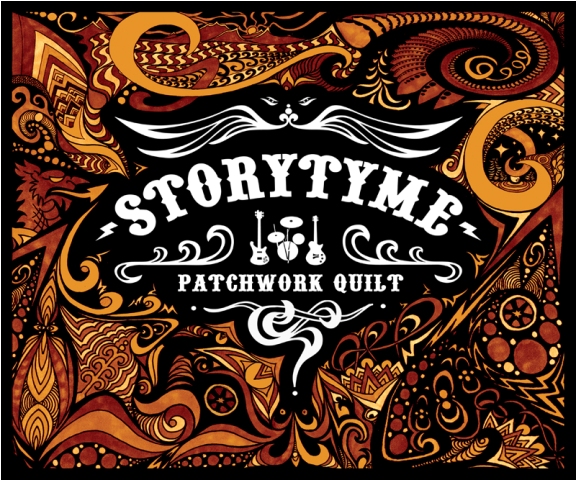
Such as this album cover, it's design is so unique and intricate in ways such as it being eye catching to an audience seeking to buy an album.
Although I would not want my digipak to be as complex as this due to a matter of time issues, the patterns and textures used on this album cover compliment the artists name "patchwork quilt" as patchworking is seen as using a lot of detail and time to complete.

Audience:

The audience for the alternative rock/indie genre are stereotypically seen as regular people who do not like mainstream music such as pop but prefer an entirely different section, artists within this genre know this because they often portray their artwork and their band name towards their liking as these artists can often relate to being a member of the audience.

In conclusion:

The genre is indie/alternative rock.
The lettering and font size/style has to be relatively big, but not big enough to take up the entirety of the album cover and instead should be just big enough to be eyecatching but not too small to read, the font has to be unique and relatively odd or intricate.
The album cover will only show images representing and relating to the subject of the song and the artist's image will not be presented anywhere on the digipak.
The same goes for the stars/icons.
The images shown on the digipak will act as a representation of the song and artists. Particularly the comedy and tragedy mask layout on the front cover.
We can easily relate tot he audience through this genre so the audience that would most likely view this music as appealing would be our own age.


Monday, 11 November 2013

Digipak Conventions

Front cover:


This is to be included on the front and spine of the digipak. However I am aiming to keep letters and wording minimalistic on the front cover of my digipak, for example:
This CD cover has a small amount of wording on it's front in the bottom right corner just enough to tell the view which band and album it is and this is ideal because the picture is relevant to the band's name which creates a good representation, however I am not looking to create something as big and intricate as this, it is still a step along the lines of what I am looking for to create my digipak, through the patterns and swirls that create a scene within a scene.
The layout is in a way what I am looking for in my digipak, as I want the name of the band to be out of the way of the actual picture, in the corner of the cover or along the bottom so the words have a small effect on the picture, and the viewer's eye is firstly attracted to the picture and not to the words.

What I am not looking for is an album cover that revolves around wording to carry it's message across, attract the viewers attention and tell them which band and what album it is.
For example:
This is what I believe to be a bad album cover as it resides on words and nothing else, although the words are in a strange and erratic font with different colours which possibly make it attractive to some audiences I would deem this as quite bland and an everyday type of album cover.


Spine:

The spine is where I am aiming to put all of the relevant information to tell the audience what band and what album it is:
For example, this digipak has a minimalistic front cover in terms of wording with it being only on the top and bottom of the front cover instead of within the picture, and has an eye catching picture on it's front, whereas its spine contains all of the wording to tell the viewers which band and album it is.


Track Listing:

I am aiming to put this on the inside of the digipak on one side as associated with the picture above, although I would like to put some intricate designs behind the list of tracks to make it more appealing, but many artist's digipaks have only a blank page as shown above with a list of songs contained within the CD.
Although one possible idea is to free up space on either side and put the tracks on the actual disk itself. For example:

This digipaks uses the disk for it's track-listing and in doing so frees up space on the other side for messages and notes etc.
I believe that using the disk for track-listing may be more useful than putting it on one of the side pages.


Barcode:

The barcode is most common on a digipaks and is located in the bottom corner on the back of the digipaks, it is essential if it is to be sold in stores:
The barcode is usually always situated on the back of the digipak but can either be at the top or bottom corners.


Parental Advisory:

This image is only given to digipaks and albums which contain inappropriate content for those under the age of 16:
It is usually for explicit lyrics, so anything containing drugs, sex, violence etc.


Image of the artist/image that suits the genre:

Digipaks can contain either of the two or even both, for example the picture situated above represents an image of the artist and also an image that suits the genre as the big words 'Lunatic' at the top show the type of mood the artist is going for which is insanity or angst and furthermore shows this through the minimalistic use of colours, black, white and grey.


For example, this CD album has lots of different little designs and figures on it, with many different colours and differing levels of intricate patterns. In my eyes this would attract more people than the one above due to it's brightness and complex design.


These three CD covers show each individual artist from the band Green Day.

 In my opinion I believe that releasing three individual albums with each of the artist's faces on is a way of increasing publicity and sales, but it is also designed for brighter colours in order to attract an audience, even though Green Day's genre is more along the punk rock line.


Record company information:


You can usually find the record company information  on the back of these albums, for example:
"ELEKTRA ENTERTAINMENT GROUP, INC."
"Warner Music Group
An AOL Time Warner Company
75 Rockefeller Plaza
New York, NY 10019
Pinnacle Building 3400 West Drive
Street 2nd Floor,
Burbank, CA 91505"

This information is usually on the back of every CD cover giving the recording studio and it's address.


All CD covers should also have copyright information on the back of their albums such as the one above:
"Copyright 2003 Elektra Entertainment Group Inc. for the United States and WEA International Inc. for the world outside of the United States. Warner Music Group. An AOL Time Warner Company. All rights reserved. Printed in U.S.A WARNING: Unauthorized reproduction of this recording is prohibited by Federal law and subject to criminal prosecution."

Most albums also give instructions on its usage as well as system requirements and extra information about the band itself, e.g. websites to look up upcoming releases, tour dates and locations etc.

Wednesday, 6 November 2013

More digipak cover ideas

There are a few more ideas I have thought up that are relevant to and also relate to the subject that we have committed to our music video:
This type of image we could do something with as we used two Guy Fawkes masks, as this resembles old English dramatics which we could link in to the development of our music video and could include within our digipak, possibly as an intricate design.


Another design I am thinking of also includes using the two tempters as a front cover photo, but using half of each one and putting them together.

This is an example of the type of idea that I am going for to include on the front of our digipak cover.